
KS1 SATs Papers: Free Year 2 Past Papers & Mark Schemes
Every official KS1 SATs paper from 2016 to 2026, plus the 2015 and 2014 sample tests, free to download and print. Maths, reading and SPaG (grammar, punctuation and spelling), each with the mark scheme, administration instructions and scaled-score thresholds.
Latest KS1 SATs papers (2026)
The most recent optional KS1 tests. Download the papers, then the mark scheme to check answers.
2026 KS1 SATs papers
Maths · Reading · SPaG (GPS)
2026 Maths
2026 Reading
2026 SPaG (GPS)
Instructions: Paper 1 spelling script, Paper 2
Thresholds & scaled scores · Modified materials pack (zip) · Copyright information
All KS1 SATs past papers by year
Tap a year to open it. Every year includes maths (arithmetic and reasoning), reading and SPaG, with mark schemes.
2025 KS1 SATs papers
Maths · Reading · SPaG (GPS)
2025 Maths
2025 Reading
2025 SPaG (GPS)
Instructions: Paper 1 spelling script, Paper 2
Thresholds & scaled scores · Modified materials pack (zip) · Copyright information
2024 KS1 SATs papers
Maths · Reading · SPaG (GPS)
2024 Maths
2024 Reading
2024 SPaG (GPS)
Instructions: Paper 1 spelling script, Paper 2
Thresholds & scaled scores · Modified materials pack (zip) · Copyright information
2023 KS1 SATs papers
Maths · Reading · SPaG (GPS)
2023 Maths
2023 Reading
2023 SPaG (GPS)
Instructions: Paper 1 spelling script, Paper 2
Thresholds & scaled scores · Modified materials pack (zip) · Copyright information
2022 KS1 SATs papers
Maths · Reading · SPaG (GPS)
2022 Maths
2022 Reading
2022 SPaG (GPS)
Instructions: Paper 1 spelling script, Paper 2
Thresholds & scaled scores · Modified materials pack (zip) · Copyright information
No papers for 2020 or 2021. The tests were cancelled in both years because of COVID-19.
2019 KS1 SATs papers
Maths · Reading · SPaG (GPS)
2019 Maths
2019 Reading
2019 SPaG (GPS)
Instructions: Paper 1 spelling script, Paper 2
Thresholds & scaled scores · Modified materials pack (zip) · Copyright information
2018 KS1 SATs papers
Maths · Reading · SPaG (GPS)
2018 Maths
2018 Reading
2018 SPaG (GPS)
Instructions: Paper 1 spelling script, Paper 2
2017 KS1 SATs papers
Maths · Reading · SPaG (GPS)
2017 Maths
2017 Reading
2017 SPaG (GPS)
Instructions: Paper 1 spelling script, Paper 2
2016 KS1 SATs papers
Maths · Reading · SPaG (GPS)
2016 Maths
2016 Reading
2016 SPaG (GPS)
Instructions: Paper 1 spelling script, Paper 2
2015 KS1 sample papers
Maths · Reading · SPaG
Sample tests published before the first new-style KS1 tests in 2016. Good extra practice.
2015 Maths
2015 Reading
2015 SPaG (GPS)
Instructions: Paper 1 spelling script, Paper 2
2014 KS1 sample materials
Maths · Reading · SPaG
Early sample questions for the 2014 curriculum, with and without examiner commentary.
2014 Maths
2014 Reading
2014 SPaG (GPS)
Looking for older papers? See our pre-2014 KS1 SATs papers (old curriculum).
How KS1 SATs are scored
Each KS1 test gives a raw mark, which is converted to a scaled score from 85 to 115. A scaled score of 100 or more means the child is working at the expected standard. Because the raw marks needed change slightly each year, always use the “Thresholds & scaled scores” file inside the year you used.
Writing and science are assessed by the teacher rather than tested.
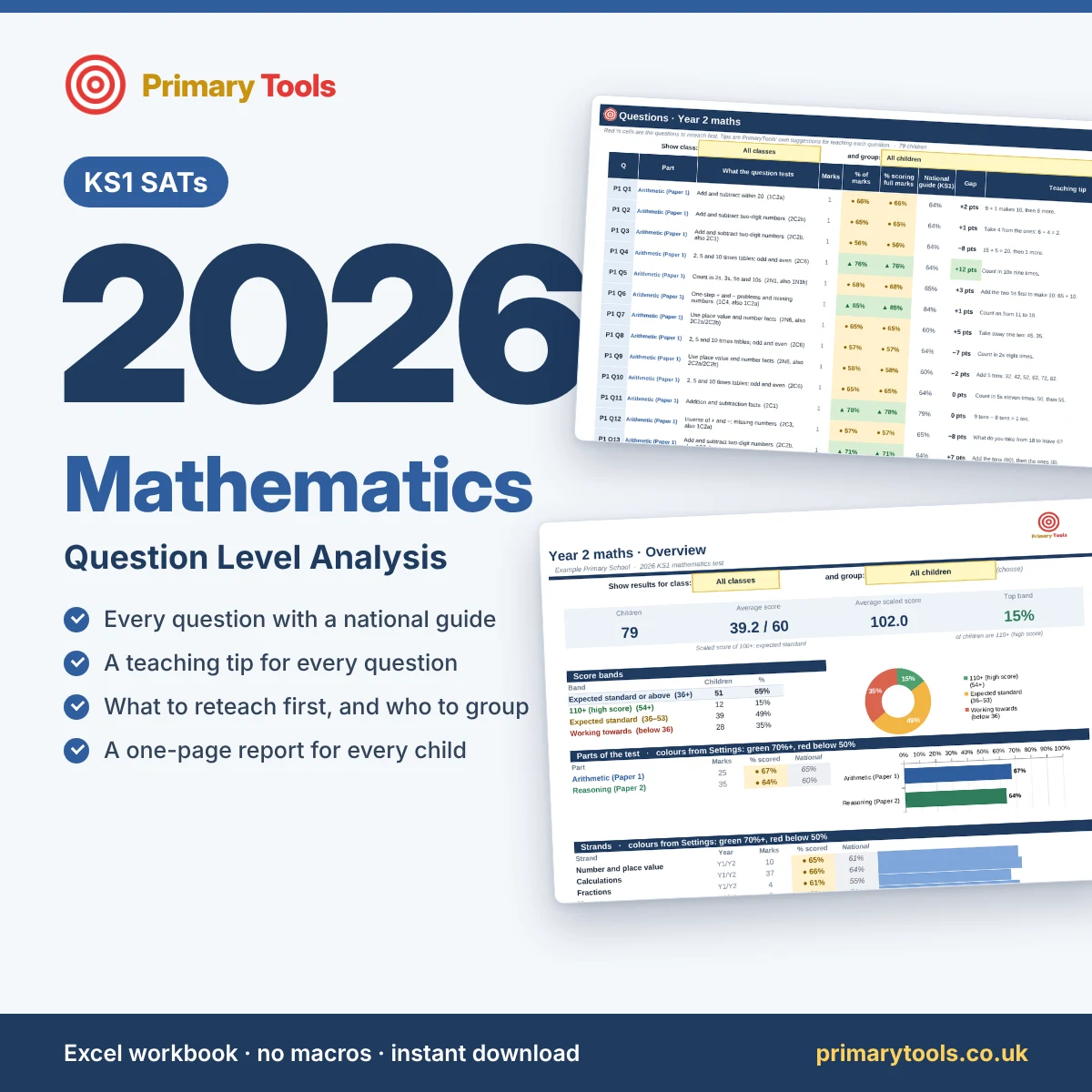
See exactly where your Year 2 class lost marks
Our KS1 QLA (question level analysis) workbooks take your pupils’ marks for any year’s papers and show gaps by question, topic and pupil, with scaled scores worked out for you. Free versions are available to try. Prefer not to mark at all? Our mid-year marking and analysis service does it for you.
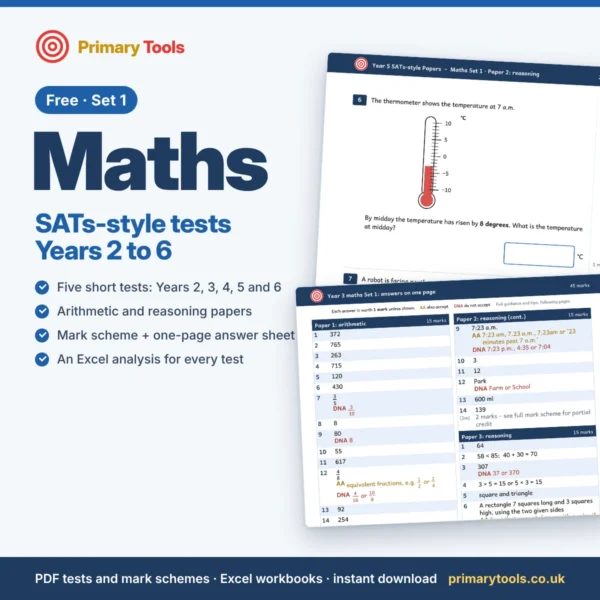
How to use KS1 SATs papers at home: a 4-step plan
- Keep it short. Try one section of a paper at a time, such as the first page of maths Paper 1 (arithmetic).
- Read questions aloud where allowed. The instructions file says which questions can be read to children in the real test.
- Mark together using the mark scheme, and praise the method as much as the answer.
- Little and often wins. Five to ten minutes a day beats a long weekend session. Our Rapid Reading, Grammar and Arithmetic sheets are built for exactly that.
KS1 SATs FAQ
Are KS1 SATs still compulsory?
No. End of key stage 1 assessment stopped being statutory from the 2023 to 2024 school year. The Standards and Testing Agency still publishes optional KS1 tests each year, and many schools use them in May of Year 2 to check progress and inform their own teacher assessment.
When are the KS1 SATs in 2027?
Schools that choose to use the optional KS1 tests are recommended to give them during May 2027. Each school picks its own days within that month, so ask your child's teacher if you want to know exactly when.
What papers are in the KS1 SATs?
Maths has two papers: Paper 1 arithmetic and Paper 2 reasoning. Reading has two papers: Paper 1 combines short texts with questions, and Paper 2 has a separate reading booklet and question booklet. Grammar, punctuation and spelling also has two papers: a spelling test and a grammar and punctuation questions paper.
How are KS1 SATs scored?
Raw marks are converted to a scaled score from 85 to 115. A scaled score of 100 or more means the child is working at the expected standard. The raw marks needed change each year, so use the thresholds file for the year of the paper you used.
Are the KS1 results reported to parents?
As the tests are optional, schools decide how to use and share the results. Many include them in the end of year report or discuss them at parents' evening. Schools must still report the phonics screening check result.
Are these the official KS1 papers, and are they free?
Yes. These are the official KS1 national curriculum test papers and mark schemes published by the Standards and Testing Agency, free to download and print. The copyright information file for each year sets out the terms.
Why are there no 2020 or 2021 KS1 papers?
The tests were cancelled in 2020 and 2021 because of COVID-19, so no papers were set for those years.
How should I use KS1 papers at home?
Little and often works best with six and seven year olds. Do one section at a time rather than a whole paper, read the questions aloud where the instructions allow it, and stop while it is still going well. Marking together with the mark scheme turns mistakes into quick teaching moments.
Other primary assessments
Official guidance: GOV.UK primary assessment dates · GOV.UK past test materials